





“Issue of Climate Change is a global terrorism”- Prime Minister, Narendra Modi.
Dr. N. Munal Meitei
Environmentalist, presently working as DFO/Chandel,
email: nmunall@yahoo.in

Many Environmentalists are very sadly to remind that every year, the environmental related budget are substantial cuts seeming to fail to address the country’s worsening pollution and vulnerability to climate change. The budget for the Ministry of Environment, Forests and Climate Change for this fiscal year has been ₹3,413 crore with ₹287 crore or 9% more than the previous year with eight missions under National Action Plan on Climate Change (NAPCC). Unfortunately, the need of the hour for the country like India is to encompass and resolves the issues of climate challenges politically.
Climate change has already affected our society and will continue to do with harsh effects in futures to come. The physical and chemical changes of human activities are being felt in our natural ecosystems.
I have talked with some sugarcane growers from Kakching. They told, some years back, Kakching was the sugar bowl of Manipur. Almost all foot hills were planted with sugar cane. But now, almost 95% of such sugar cane plantations have been stopped. While I asked one of the cultivators who was once a well-known farmer in this field, told that scanty rainfall has forced them to stop sugar cane growing. As we know, sugar cane contains 90% water and hence it needs a lot of rains. As per him, earlier, one acre of land could give about 70-80 tins of condensed sugar juice, chuhi but now with their maximum efforts, they could get only about 20-25 tins. And thus, climate change has stopped them from sugar cane growing.
While asked about for any other alternative crops, the cultivator said that no hope is left except the good rainfall. They have tried for other crops but due to poor rainfall, no crop favored them. Such environment impacts have changed their entire income source and societal set up. As an outcome they are forced to call back their school/college studying children except to put them to some income earning jobs.
The same is for the orange farmers in Tamenglong also. A farmer while contacted, said that due to climate change and other effects, now the orange plants are facing with stem borer, root rot and leaf curling diseases giving a blow to these once proud orange farmers of Tamenglong. Not only in reducing the fruit sizes and the number of fruits per tree but alternate fruit bearing is going on.
While I contact a lemon farmer from Kashai village in Ukhrul, he told that in the past, the sizes of the lemon fruit were bigger, juicy and trees were healthy. But due to climate change, now the sizes of lemon have been reduced with the challenging problem of the lemon trees are being attacked by the insects like stem borer, leaf cutters etc. giving a harsh blow to the lemon farmers. The same is for Heiribob (Citrus hystrix) farmers from Khongkhang and other nearby villages in Tengnoupal District also.
Such is the similar fate in Thanga and Karang also. Earlier a family in this small island village in the Loktak Lake could catch as much fish as to earn a manageable amount to run their family. But now, it is impossible for them to catch the fishes even with the investment of maximum amount to purchase the costly fishing nets. Due to many changes in water chemistry of the Loktak Lake, the number of fishes and species has been reduced causing the hardship to all the villages near the lake to get their livelihood.
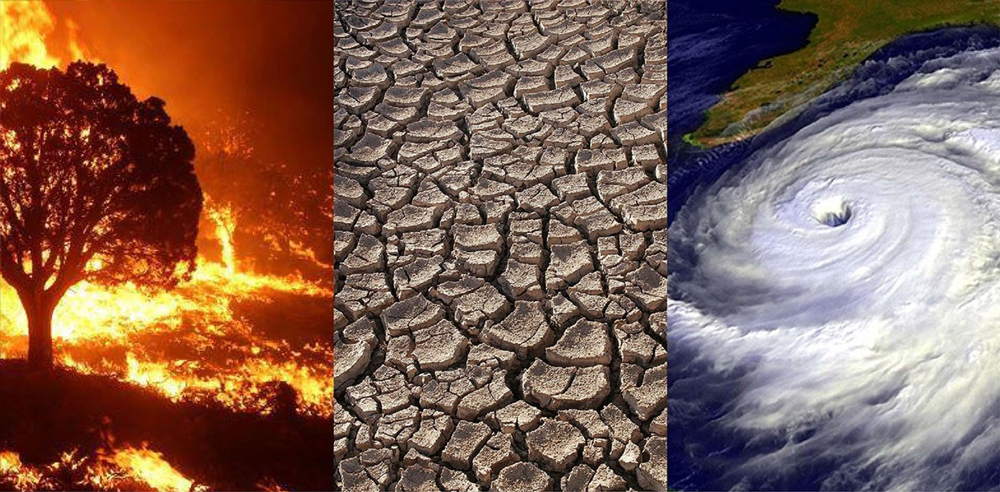
The frequency of extreme weather events is increasing. Hot days are becoming even hotter and more frequent, and both drought and heavy rain and sometime hailstorm are continuing to occur more often. This year, we are getting good rainfall as of now, but we can’t predict for the booting stage of paddies or accompanied with heavy rainfall at the time of harvesting.
At the global scenario also, El-Nino events are becoming common and everywhere there are the problems of scanty rainfall but surprisingly more rains are noticed at Atacama, the driest place of the world. The poles are getting warmer reaching upto 18.3°C. Because the cyclones draw their strength from the heat of ocean water, a warmer climate means stronger cyclones.
As climate change causes the ocean to rise, increased atmospheric CO₂ changes ocean acidity which changes our climatic condition. These changes harm the marine ecosystems, destroying coral reefs and planktons which produce 60% of all oxygen on the earth.
Changes in rainfall and temperature will force plants and animals to migrate and increasing the rate of extinctions globally to the tune of one species per 20 minutes. Already, seen the changes where plants sprouting, flowering and losing their leaves at different seasons challenging our survival.
Climate change has induced the changes in the timing of flowering of many plants thereby threatening the failure in pollination and endangering the species. Frequent droughts are forcing farmers to plant with different crops and farmlands becoming unusable. Every cultivator expects for good harvest but climate change disposes. As climate change causes plants and animals to relocate, pandemics like the Ebola, Covid-19, swine flu and bird flu etc. have threatened the world.
As predicted, the effects of climate change will affect the security of nations as conflicts brew over competition for water, food and land. Therefore, it is the right time for every one to do something for safeguarding the planet.