





Dr. N. Munal Meitei
Environmentalist, presently working as DFO/Chandel,
email-nmunall@yahoo.in

“We don’t own the planet Earth; we belong to it. And we must share it with our wildlife.” – Steve Irwin
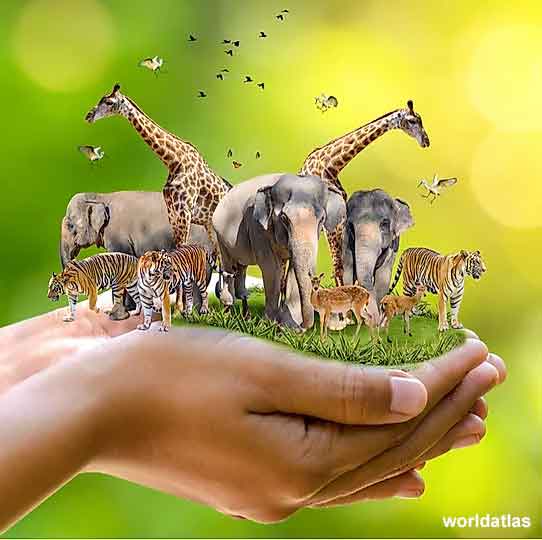
Understanding and valuing of nature with a dynamic state of coexistence is the character quality for 71st Wildlife Week that takes place from the 2nd to 8th October. The week serves as a poignant reminder to protect nurture’s diverse forms of live. With providing multiple beauties, foods, medicines and flourishing the planet, wildlife are the most precious gift of God. Saving wildlife is not a favour but for our survival.
The theme for this year is “Human-wildlife coexistence, मानव-पशु सह-अस्तित्व.” When God created, all animals have their own live and responsibility. Wildlife conservation is a team work. We alone can’t save our planet’s amazing animals and plants. Wildlife week is appealing the society about the intricacies of animal life and to unite in preserving the magnificent tapestry of lives that surrounds us.
By taking a stand and fostering a culture of conservation, we can collectively secure a future where both human and wildlife thrive in harmony. However, factors like population explosion, rapid globalization and industrialization have put an unhealthy strain.
The wildlife has an intrinsic value and contributes to the ecological, genetic, economic, scientific, educational, cultural, recreational and aesthetic aspects. At the heart of wildlife conservation lies the preservation of endangered species, facing threats such as habitat destruction, poaching and climate change. It also reminds us of the urgent need to step up the fight against wildlife crime. Wildlife preservation is also a plan to manage wildlife along with the human progress as both are indispensable.
The alarming reality of species extinction, with over 69% of Earth’s 4 billion species now extinct including 25% of mammals, 1 in 6 bird species and 41% of amphibians are at stark. This rapid loss of biodiversity poses a significant threat to our ecological equilibrium, potentially leading to the extinction of critical flora and fauna, integral components of our delicate ecosystem.
The essence of Wildlife week lies in fostering empathy and compassion for a harmonious coexistence where humans play a lead role in ensuring the well-being of the other creatures. Any harm to the wilderness can have cascading effects, disrupting food chains, altering nutrient cycles and destabilising entire pristine ecosystems.
India, one of the most biodiverse countries in the world and among 17 countries that have the distinction of being awarded the title ‘Megadiverse’ for being home to a vast diversity of flora and fauna is blessed with 5 hot spots. The country covers only 2.4% of the Earth’s land but harbor 21% of world population and 15% of cattle population. It’s home to 7.8% of all known species, including over 45,000 types of plants and 91,000 types of animals.
The country’s varied landscapes and climate have created different ecosystems like forests, wetlands, grasslands, deserts and coastal and marine habitats. These ecosystems support rich biodiversity. More than 500 species of mammals, 1220 species of birds, 1600 species of reptiles and amphibians and 57000 species of insects populate in this subcontinent. India owns 75% of the world’s wild tiger population, 60% of Asian elephants, 80% of the one-horned rhinoceros and the entire remaining population of the Asiatic lion.
But the rich and fascinating wildlife brings itself with several threats as well. India’s vanishing wildlife is no longer just a biodiversity crisis—it is a public health emergency born of human-induced ecological collapse. Will Wildlife Protection, Acts, 1972, the ‘protectionist’ paradigm for conservation of wildlife in India achieve the target?
The National Wildlife Database Centre of WII has been developing a National Wildlife Information System (NWIS) on the Protected Areas of the country. To make the wildlife conservation plans successful, the country has 1022 protected areas as of November 2024 comprising of 106 National Parks, 573 Wildlife Sanctuaries, 123 Conservation Reserves, and 220 Community Reserves, covering approximately 5.43% of our geographical area. We also have 91 Ramsar sites of wetland importance.
In the Union Budget 2025-26, the Ministry of Environment, Forests, and Climate Change has been allocated ₹3,412.82 crores, which is 9% higher than the 2024-25 revised estimates of Rs. 3125.96 crores. For 2025-26, the government has allocated ₹450 crore for the Integrated Development of Wildlife Habitats under its centrally sponsored scheme. Additionally, ₹290 crore, 64% of the total allocation has been earmarked for Project Tiger and Elephant, reflecting an 18% increase from the 2024-25 revised estimates.
India’s unwavering commitment to wildlife conservation, under the leadership of Prime Minister Shri Narendra Modi, is reflected in a series of transformative initiatives that blend tradition with cutting-edge technology. From strengthening flagship programs like Project Tiger and Project Elephant to pioneering new conservation efforts for many flagship species, the Government has adopted a holistic and science-driven approach.
The integration of artificial intelligence, geospatial mapping and community-led conservation underscores India’s global leadership in wildlife preservation. The remarkable resurgence of endangered species, strengthened legal frameworks and a strategic integration of technology also advance the country to environmental stewardship. Moreover, India’s collaboration with IUCN, multilateral bodies and conservation partners has reinforced its leadership in addressing global biodiversity challenges.
By fostering cross-border cooperation, leveraging scientific innovation and ensuring community participation, India continues to drive a holistic and inclusive conservation agenda. As we mark Wildlife Week 2025, the nation reaffirms its resolve to protect and restore ecosystems, ensuring a sustainable and resilient future for generations to come.
The present status of wildlife in Manipur which has two hotspots –Himalayan and Indo-Burma is very alarming. The hill districts where maximum of our wildlife florist have the tradition of hunting. In most of the hill areas, due to lack of awareness, wanton killing of wildlife continue. Authorities are still issuing gun licenses which are mainly meant for hunting. Thousands of acres of wildlife habitats are destroyed every year from indiscriminate felling, jhoom and poppy cultivation. Thus 46% people residing in hills which comprise 90% of state’s geographical area should take the proactive role to conserve the wildlife in Manipur.
The wild animals that once roamed abundantly in the state are now almost negligible. The state’s changing climate such as scanty rainfall, rising temperature, cyclones, landslides, floods, diseases and pollution have also given unbearable impacts to our wildlife.
Wildlife has interconnectedness with nature to maintain our ecological balance. Therefore, it should be our primary responsibility to protect and conserve the wildlife during this Wildlife Week for a thriving future and planet.