





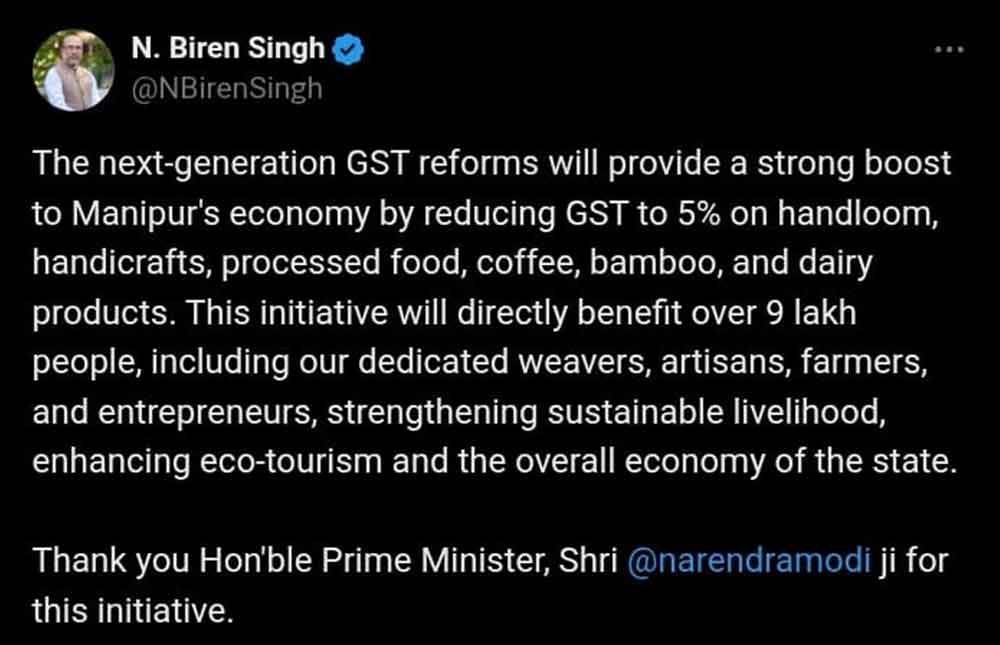
Imphal: Former Manipur chief minister N. Biren Singh has welcomed the newly announced next-generation GST reforms, stating that it will boost Manipur’s traditional industries and rural economy.
Biren on Sunday at his X wrote “The next-generation GST reforms will provide a strong boost to Manipur’s economy by reducing GST to 5% on handloom, handicrafts, processed food, coffee, bamboo, and dairy products. This initiative will directly benefit over 9 lakh people, including our dedicated weavers, artisans, farmers, and entrepreneurs, strengthening sustainable livelihood, enhancing eco-tourism and the overall economy of the state.”
He thanked Prime Minister Narendramodi for the initiative.
The revised GST rates mark a step towards economic reforms across India. By easing the tax burden on essential and value-added sectors, these changes are set to boost production, affordability, and market competitiveness. For smaller yet high-potential states like Manipur, the impact is especially meaningful, empowering local farmers, artisans, and entrepreneurs.
According to a report titled “GST Reforms 2025: How Manipur’s Economy Will Gain Across Sectors”, the new policy will benefit thousands of people across the state. Around 2.5 lakh weavers are engaged in handloom production, 1.2 lakh artisans depend on bamboo and cane crafts, 1.5 lakh workers are employed in food processing, more than 1 lakh are involved in dairy production, and nearly 10,000 farmers cultivate coffee in districts like Ukhrul, Senapati, and Chandel.
The report noted that the reforms will help preserve traditional livelihoods, empower women artisans, and encourage sustainable farming and craft practices. “Lower GST rates are expected to bring down production costs, improve market reach, and create new job opportunities in rural and hill areas.”
Economists believe that the new GST policy will drive inclusive growth and help strengthen Manipur’s local economy.
The initiative is also part of the Union government’s larger effort to promote sustainable and self-reliant development across the Northeastern region.