






“A river doesn’t just carry water, it carries life.”
Dr. N. Munal Meitei
Environmentalist, presently working as DFO/Chandel,
email: nmunall@yahoo.in

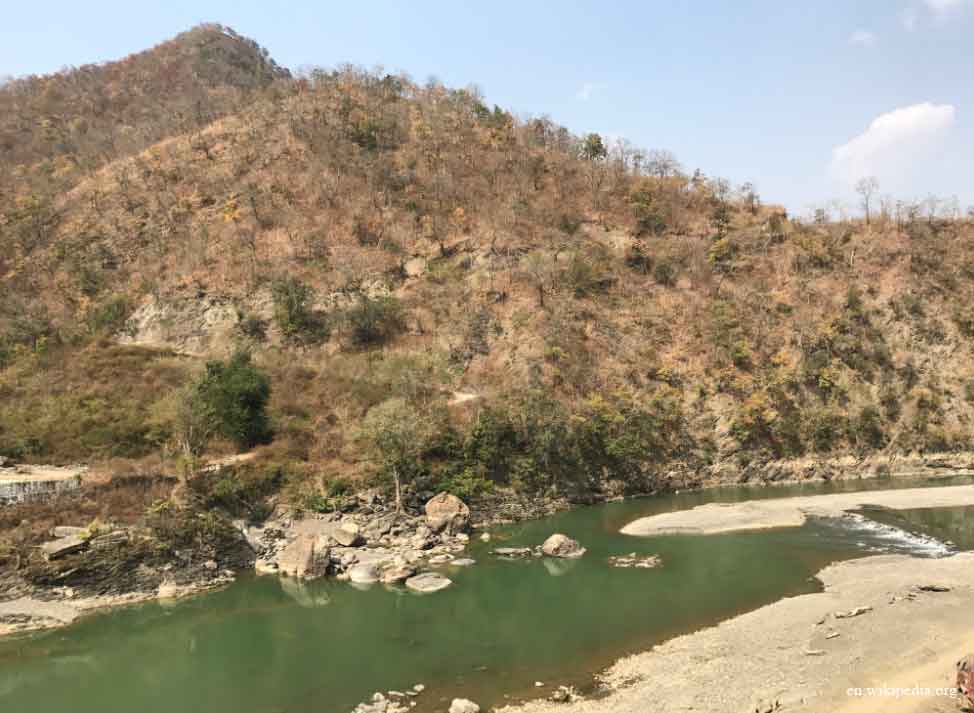
World Rivers Day is observed on 28 September, the fourth Sunday this year. The theme for 2025 is “Waterways of Life.” It underscores the crucial role that Rivers play in sustaining life. This day highlights the ecological, cultural and economic importance of rivers, while promoting their protection and restoration locally and globally. Rivers form an integral part of the environment and they are vital for people and wildlife. With rivers facing threats from pollution, overuse and climate change, this day serves as a crucial call to action for communities, students, organizations and governments to ensure the health and sustainability of these vital waterways for future generations.
Rivers are a part of our communities. Many religions assumed, the rivers as mother. However, climate change, rapid urbanization, industrialization and increase in population have caused tremendous impacts on Rivers. Also, there are many communities whose survival, livelihood and existence solely depend upon rivers. A new report states that just one third of the world’s Rivers remained free-flowing rendering a more critical than ever.
All the ancient civilizations flourished on the river banks. River valley and plains provide fertile soils and good harvest for the people. Rivers are the most beautiful things seen from the outer space. Rivers connect us. Rivers have no political boundaries. Rivers are messenger of peace; with no caste, no language but they co-join together for different nations on its courses. Thus, Rivers are part of a global movement to care for and protect-fiercely and unapologetically- our communities.
Rivers are the arteries of the planet. They act as the prime role for the global biodiversity and climate change. Rivers carry water and nutrients to areas all around the earth. They play a very important role in the water cycle, acting as drainage channels for the surface water. Rivers drain nearly 75% of the earth’s surface and provide excellent habitat and food for many organisms. Today in many countries, Rivers produced 15% of the world’s total electricity, which is approximately 4210 TWh in 2024.
Flooding is the greatest risk for riverfront peoples. The risk of flooding increases significantly with Rivers that have little or no flood control. The fallout from flooding could lead to extensive property damage and expensive, time-consuming repairs. But in truth Rivers, whose courses are in virgin, will never be flooded. Rivers join the mountains, the valley and then to the oceans as a linkage for the biodiversity.
Walking along River bank and spending time in the natural space helps to reduce stress, anxiety and worry. Rivers play a crucial role in our well-being, happiness and physical and mental health. Research has shown that being in and near the river or water can provide a long list of benefits for our mind and body, increasing an overall sense of well-being and happiness. Rivers also lowered the heart and breathing rate improving the heart.
The events of world river day include riverside cleanups, catchment restoration, awareness programs, nature walk, school projects, art displays, cycling, runs and parades. Citizens are encouraged to join the event in their own area and local rivers. Other different activities may include encouragements on wildlife and fishes that lives in the rivers.
Rivers in every country face an array of threats and the hence active involvement of the communities is needed to ensure the health of Rivers in the years ahead. Pollution, deforestation in catchments, water extraction, drought, dams and invasive aquatic species threaten the health and future of our Rivers. Some of the worst impacts of climate change on both people and ecosystems will be felt through its impacts on River. Minimizing the impacts of climate change will require diversifying away from dependence on Rivers for electricity generation and flood control.
Around the world, climate change is melting glaciers that feed major Rivers, contributing to drought-induced hydroelectricity blackouts and threatening the water supply and River resources for billions of people. Besides heavy rain and discharge, the urban and rural encroachments in the river basin –including infrastructure such as railway lines, expressway and other roads – played a negative role in creating bottlenecks, which exacerbated the floods to the tune of 20%. For a better planning in the floodplain, not only avoiding encroachment and building on the river basin, but we should protect wetlands that are the natural sponge for floodwaters.
Manipur has four major river basins: the Barak River Basin to the west, the Manipur River Basin in central, the Yu River Basin in the east and a portion of the Liyai River Basin in the north. The major rivers in the state are; Imphal River, Iril River, Nambul River, Thoubal River, Sengmai River, Chakpi River, Wangjing River, Tuivai River, Leimatak River and Khuga River. Though, the beauty of these Rivers adorns the state even more, most of these Rivers are losing their pristiness.
Now, many of the rivers are endangered. In a world where many of our Rivers and their surrounding communities and ecosystems are struggling, threatened by multiple impacts of overpopulation, pollution, plastics, climate change and ineffective governance, it should be our topmost priority to conserve and protection of the rivers for the sake of mother earth and the future generations.