








Dr. N. Munal Meitei,
Environmentalist, presently working as DFO/Chandel.
email-nmunall@yahoo.in

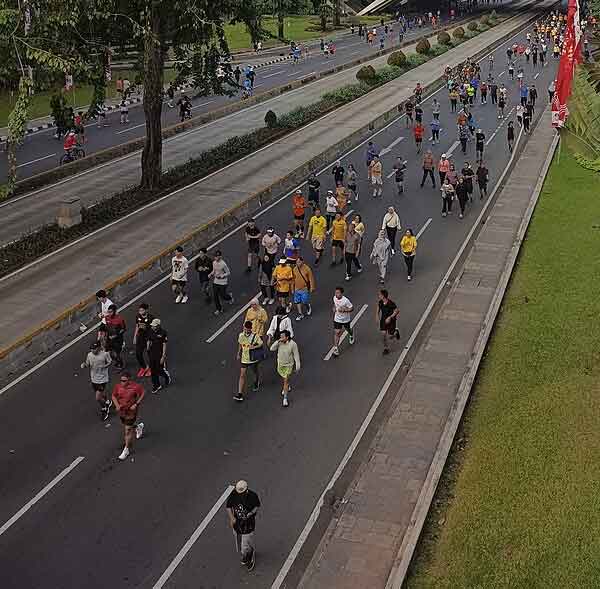
September 22 is observed as World Car Free Day. The event highlights on numerous benefits of going car-free to citizens—including reduced air pollution and promotion of walking and cycling for health and safer environment. This day also called ‘carpooling’ or ‘car-lite’ to encourage using public transports and increase exercises.
The day brings for less congested streets and re-imagining our urban environments as cleaner, greener and more accessible spaces for everyone. Many towns and cities are built around for use of cars, often leaving little space for pedestrians. But the prioritization of cars by city planners has various negative impacts on environment and human health. The world has reached a point where we need to start thinking about reducing our reliance on fossil fuels and moving towards the green energy sources.
It’s not just the climate that cars are affecting, it also worsens air quality, with vehicle exhaust for large quantity toxic pollutants which are linked to millions of deaths worldwide. People living in urban centres are particularly exposed to these hazardous pollutants, they further aggravated by traffic jams, which have become a persistent problem in almost all cities as the number of vehicles on the roads has risen.
Many cities around the world are now trying to reduce car numbers, whether by increasing cycling lanes, creating car-free zones or introducing limited traffic zones, congestion charges and odd-even rotation.
Transport is the fastest-growing source of fossil-fuel CO₂ emissions, which is the largest contributor to global warming. The number of cars in the world is estimated to be around 1.47 billion. These cars exhaust out roughly 3.5 billion metric tons of CO₂ (Gt. CO₂) per year. This accounts for half of global transportation CO₂ emissions, but also represents 10% of total fossil CO₂ emissions. According to the IPCC, road transport accounts for about 20% of total greenhouse gas emissions in addition; road vehicles are also responsible for 1.19 million accidental deaths and 50 million injuries per year.
Passenger vehicles are the largest chunk of emissions, releasing about 45% of CO₂. If the conditions continue, annual GHG emissions in 2050 will be 90% higher than today. Vehicle emissions increase from poor fuel quality and weak vehicle regulation. The UN Environment to support countries address upon air pollution through the adoption of cleaner fuels and more efficient vehicle technologies and standards to phase out leaded gasoline.
India with the third largest road network, has over 21 crore two-wheeler and over 7 crore four-wheeler and above category of vehicles registered as informed in the Parliament by Shri Nitin Gadkari on 3rd August, 2023. Road travel seemed to be the preferred choice in India with around 60% of the population who used personal or shared vehicles for commute. Relative to the country’s population, there are 185 two-wheelers and 34 cars for every 1000 people in the country which are approximately 1 in 10 households, a stark contrast to 980 in America and 591 in Japan.
India is the fifth-largest global car manufacturer and the annual car sales are projected to increase from the current 4.5 million to about 10.5 million – three times increase – by 2030, which will increase exposure to vehicular exhaust emissions.
According to studies, vehicles annually contribute about 290 gigagrams (Gg) of PM2.5. At the same time, around 8% of total GHG emissions in India are from the transport sector and in Delhi, it exceeds 30%.
The main sources of air pollution in Manipur are the exhaust from fast growing number of automobiles, dust-fall due to bad roads and other commercial earthmoving activities. There are more than 4,09,825 registered vehicles consuming 2,00,813 litres of petrol and 3,15,544 litres diesel per day in 2017-18 data. But we know, while 1 litre of petrol is brunt, 3 kilo moles of CO₂ are produced.
A cirque valley with the enormous emissions whirling around consistently has warned us with a very unusual insidious weather accompanied with cloud burst, scanty rainfall and sometime drought. An intimidate 42°C at Noney and 37.2°C in Imphal on 20 September last year was a clear signal.
Therefore, on coming World Car free Day, let’s learn the habit of carpooling and as an exercise, let’s walk and cycle where-ever is possible for the future environment.