






Dr. N. Munal Meitei, Environmentalist, presently working as DFO/Chandel
email; nmunall@yahoo.in

“The sky is an open book, waiting for us to read its secrets.”
Increased in pollution lead to a hazier and diminished the blueness of sky. After few years, the next generation may ask, what is the colour of skies?
United Nations adopted 7 September as the “International Day of Clean Air for blue skies” since 2020. This day aims to track and reducing air pollutants and greenhouse gases and promoting products, solutions and technologies that can cut emissions and reduce pollution. The theme for 2025 is “Racing for Air”, highlights the urgent need to accelerate solutions for cleaner air and collective action to deliver clean air for all.
The day highlights the negative impact of air pollution on our economy, work productivity, healthcare and other activities. Air pollution knows no borders – everyone has a responsibility to protect our atmosphere and ensure healthy air for all. Improving air quality can enhance climate change mitigation and mitigation efforts can also improve air quality. Clean air is important for the health and day-to-day lives of people, while air pollution is the single greatest environmental risk to human health and one of the main avoidable causes of death and disease globally.
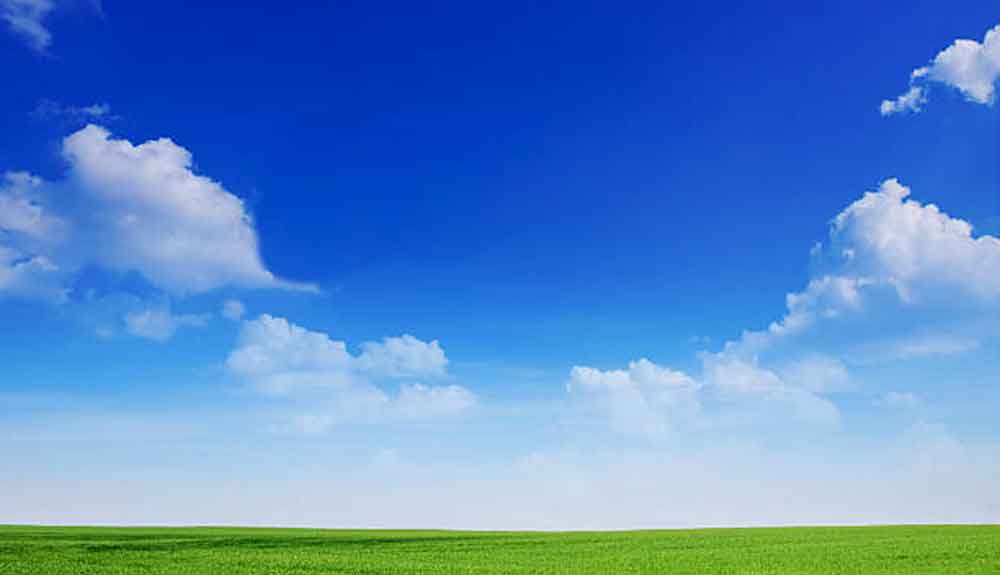
Seeing blue sky is the example of clean air. To breathe with clean air is a human right, including the rights to life, health, water, food, housing and an adequate standard of living. Air pollution also clearly violates the right to a healthy and sustainable environment.
According to UNEP, air pollution is the world’s biggest environmental killer. WHO indicates that air pollution is responsible for around nine million premature deaths each year through diseases like lung cancer, acute respiratory infections and heart diseases and in India, its 2.3 million deaths annually in 2024. Tiny, invisible pollutants penetrate deep into our lungs, bloodstream and bodies. In addition, air pollution disproportionately affects women, children and older people especially in low-income group that are exposed to indoor air pollution from cooking and heating
Air is our first contact with the world. What we inhale 12 times a minute, keeps us alive or poisons. 99% of us breathe polluted air and we can’t avoid it anymore. Air pollution is the biggest environmental health risk of our time. It also exacerbates climate change, causes economic losses and reduces agricultural productivity. By collaborating across borders, sectors and individuals, we can reduce air pollution through collective investments of time, resources and efforts.
Air pollution is a preventable problem. The solutions − laws, standards, policies, programs, investments and technologies − are known. Implementing these solutions will of course entail large investments, but the benefits of fulfilling the right to breathe clean air for all of humanity are incalculable.
The main sources of air pollution and greenhouse gases are often the same. Most actions to improve air quality also therefore help to fight climate change. Many of the drivers of climate change such as inefficient and polluting forms of energy and transport systems contribute to air pollution. Thus, strategies to fight both climate change and air pollution go hand in hand. A study suggests that increase in pollution could enhance the frequency and strength of cyclones. The 2030 Agenda for Sustainable Development, also recognizes that air pollution abatement is critical to attain its goals.
Global community should encourage countries to work together to tackle air pollution to ensure for a clean blue sky. To this end, it gives people a platform that enable cooperation to mitigate air pollution at the individual, national, regional, as well as international levels.
Air pollution is a developmental issue. Governments and policy makers have an important role to play in protecting their citizens by making structural changes that improves air quality. They can invest in processes that lead to better planning to reduce air pollution and build the capacity needed to deliver clean air.
Burning of fossil fuels – for power, transportation and industry share 80% of the global carbon emissions. Scientists anticipate that a warming climate will worsen air quality. If current emissions rate continue, ground ozone will intensify, especially in densely populated areas, leading to more health hazards.
In certain areas, a drier climate will lead to more dust storms; in others, pollen and other airborne allergens are likely to increase. As the globe warms, wildfires and associated air pollution are expected to increase, even under a low emissions scenario.
Plastics pollution is one of the dreaded industrial pollutions. Microplastics are detected in the atmosphere even in remote areas and in high-altitude glaciers, the Arctic and Antarctic, suggesting potential long-distance atmospheric transport. The incineration of plastic waste also releases toxic gases such as dioxins, furans, mercury and polychlorinated biphenyls increases air pollution and poses a threat to the environment.
If we act now, we can halve global crop losses from air pollutants by 2050. The cost of inaction is staggering, with air pollution estimated to cost the global economy Rs. 684.45 trillion per year, equivalent to 6.1% of the global GDP due to increased healthcare costs.
In India, currently 95.10 crore peoples across 450 districts are breathing air that does not meet WHO’s guidelines. Faridkot district in Punjab are breathing the worst air pollution in India right with 303µg/m3 of PM2.5 pollution. Currently 28.55 lakhs people in 37.56 lakhs in Manipur are breathing toxic air that does not meet WHO’s clean air guidelines. The district with the worst air pollution in Manipur is Thoubal, where PM2.5 is forecasted to be 7.6 µg/m3.
Now, on coming the International Day of Clean Air for Blue Skies-2025, the urgency arises for public awareness to promote and facilitate actions to improve the global air quality.