







DR. N. Munal Meitei
Environmentalist, presently working as DFO/Chandel.
email: nmunall@yahoo.in

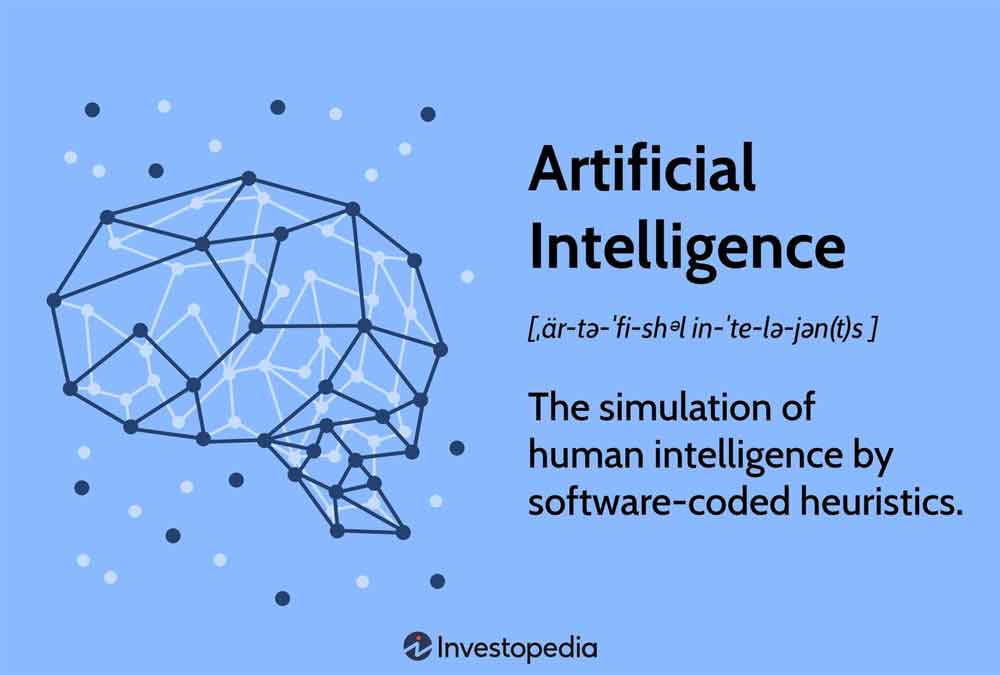
Artificial intelligence (AI) is the science and engineering of creating computers that can process large amounts of data to think like humans. The goal for AI is to do things such as reasoning, knowledge representation, planning, learning, natural language processing, perception, recognize patterns, make decisions, support for robotics and judge like humans.
AI has been advancing rapidly in recent years, with breakthroughs in algorithms and architectures. One of the many benefits of using AI is to help us view societal problems from a different perspective. Our global issues are complex and AI provides us with a valuable tool to augment human efforts to come up with solutions for vexing problems. AI is influencing a societal and economic shift towards various domains such as government, health care, environment, job market, education, entertainment & films, finance, manufacturing, transportation, agriculture and defense.
AI has become a talk in our daily lives: from automatic cars, self-serving restaurants to music covers. AI has taken the world by storm, with many intelligent act-like digitized voices for music fans to hear the artists to cover songs they’ve never sung for real, create non-existent complex and life-life images, ask questions and even help to manage a climate journey – but what does the potential AI impact to our future environment?
AI can make tremendous progress in solving, climate change, one of our biggest issues. Climate change is a gargantuan problem, but several AI technologies might be able to tackle it with prediction of climate impacts on different regions. AI climate informatics algorithm powered for 30 climate models used by the IPCC.
AI is indispensable to combat and predict climate change – by monitoring weather and adhering to the climate obstacles. Climate change is now destroying every field of the planet. AI can monitor these situation 10,000 times faster than the human race alone could. People are fostering hope that AI could help the world tackle at least some aspects of the triple planetary crisis of climate, nature and biodiversity lost, and pollution and waste.
AI can detect deforestation and forecast the impending impacts. Plastics are the most dreaded challenges of the planet staggering 85% of plastic ended up in landfills and ocean. However, AI might be able to fix these plastic problems with tracking facilities to recycle and sorting to separate different types of materials more efficiently.
Natural disasters like hurricanes, tornadoes, tsunamis, cloudburst and earthquakes are the worst enemy of the present world. AI has an important role in solving these complex environmental problems by predicting when and where these disasters are to occur next, giving an ample time for preparedness.
It’s hard to listen or watch any news without the artificial intelligence. AI market is projected to reach $407 billion by 2027 with an annual growth rate of 37.3% from 2023 to 2030. AI can enable remote sensing and analysis of environmental data from satellites, drones, sensors, cameras and other sources, providing insights into climate change, biodiversity loss, deforestation, desertification, pollution, natural disasters and other environmental issues.
AI can assist in developing renewable energy sources. AI can contribute to conserve wildlife tracking systems and protect endangered species.
AI can provide diagnosis and treatment for various diseases and conditions, such as baby language processing, analyzing symptoms of dreaded diseases, to coin medical history and referrals to doctors. AI self-driving cars, for instance, may reduce emissions by 50% by 2050 by identifying the most efficient routes. Employing AI in agriculture in some fields, produces 30% larger harvest in India.
At the same time, the world is struggling to figure out if and how to regulate these powerful tools. More work and research are needed to strike balance between using these tools and minimizing their environmental impact and their side effects.
With increased data usage also comes an increased carbon footprint. AI models require higher energy. AI systems are estimated to consume about 8% of the world’s electricity demand in 2030. According to an MIT study, AI cloud has a larger carbon footprint than the entire airline industry. AI applications depend on sophisticated hardware that require rare earth metals and other scarce materials. These devices have a short lifespan and become obsolete quickly, creating a growing problem of e-waste that is difficult and costly to dispose of.
AI algorithms often involve complex computations that generate heat and noise. AI systems should be designed with environmental efficiency, such as green computing, Eco-design and life cycle assessment. Authorities should adopt a comprehensive approach to regulate AI development and deployment, taking into account the environmental implications including legal frameworks.
However, AI can challenge human dignity and rights by affecting the autonomy, identity, agency, and well-being of individuals and communities which may manipulate or influence human behavior or decisions without their consent or awareness. Hence AI systems should be designed human-centeredness, inclusiveness and empowerment, protecting the interests and values of humans and society to accommodate the diversity of cultures and contexts.
AI also poses significant challenges and risks to the environment and society by consuming natural resources like water, fossil fuel, rare elements, generating waste and emissions, disrupting ecosystems, displacing workers, creating ethical dilemmas and threatening human dignity and rights. Therefore, it is crucial to understand and address the environmental and social impact of AI development and deployment, and to ensure that AI is aligned with human values and goals.